Storm Sniff watches the sky for falling pressure, rising storm energy and the first lightning strike within range — and tells you in time to give their meds, draw the curtains, and settle in beside them.
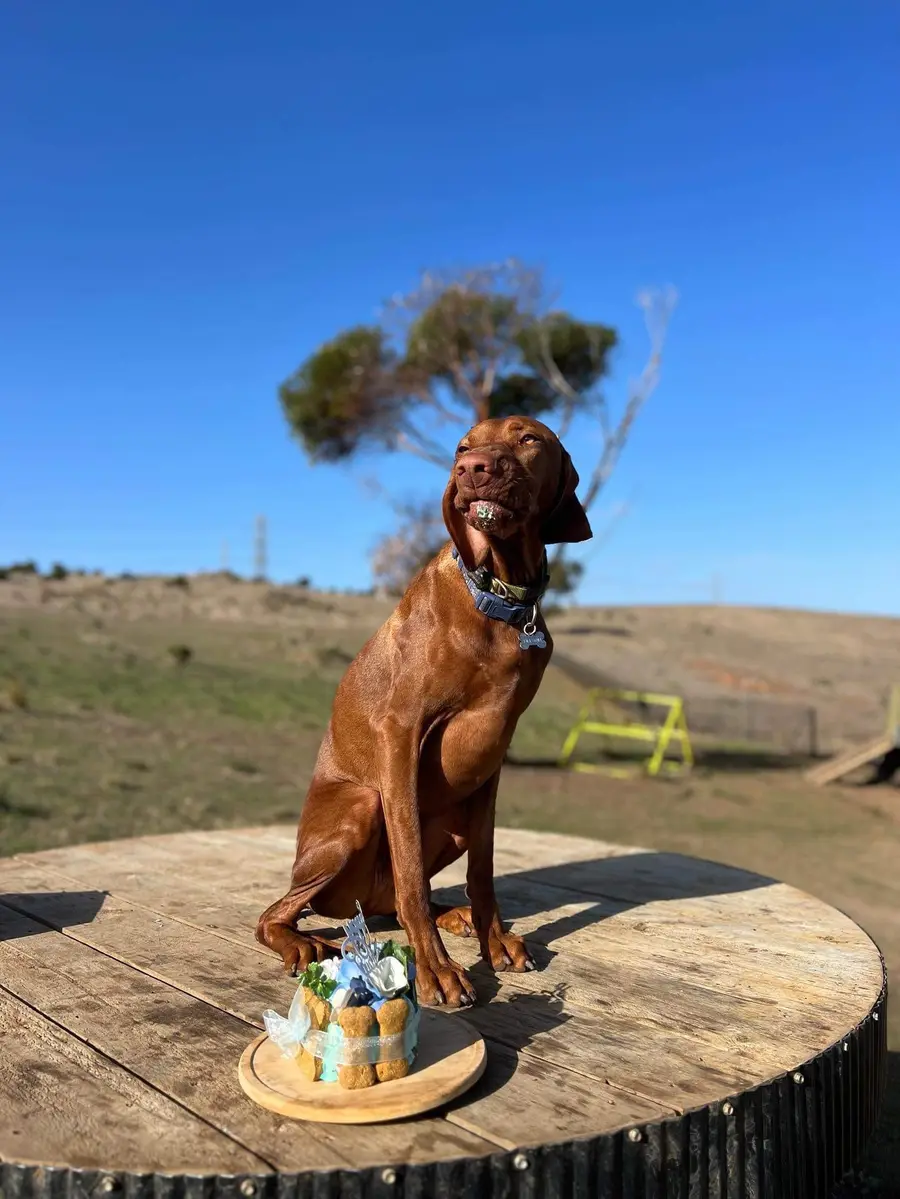
Our Vizsla Nelson bolted through a flyscreen before the first thunderclap — his body knew the storm was coming before any forecast did. That's why we built this →
Around 1 in 3 dogs struggles with noise or storm anxiety. If yours falls apart when the sky turns, they're not unusual — and you're not overreacting.
Nelson was inside. The house was locked. We thought he was safe.
He found a window we'd left cracked open for the breeze, forced it wider with his nose, and pushed straight through the flyscreen. By the time we realised he was gone, the first crack of thunder hadn't even sounded — but his body already knew it was coming. We found him with a deep cut on his back leg.
Anxiety meds need an hour to land. The dog needs ten minutes notice. The weather app gives you neither.
Trazodone takes about an hour. Fluoxetine is daily, but situational dosing only works if the situation is predictable. The forecast says rain at 4pm — Nelson is already trembling at 3:15.
We needed something that watched the sky the way he does, and woke us up first. So we built it.
We watch barometric pressure trends, convective storm energy (CAPE), and live lightning strikes inside your alert radius. Your dog already feels these. Now your phone does too.
One push notification when the sky turns. Quiet hours, configurable thresholds, and a calm tone — no shrieky "STORM ALERT!!!" theatre. Just enough lead time to dose, dim the lights, and be there.
Log what worked: the dose, the den, the music. Over a season, you'll see what actually settles your dog — and what was just hope. Your vet gets a report worth reading.
Every alert tells you what's happening, how close it is, and how long you've got — so you can act, not decode a radar map at 2am.
Practical, vet-aware guides on thunderstorm and noise anxiety — why it happens, and what actually helps.
A step-by-step guide to desensitisation and counter-conditioning for storm-anxious dogs — how to gently lower their fear over time, the right way, without making it worse.
Read →A step-by-step guide to building a storm safe space (den) your dog will actually use — where to put it, what to add, and how to make it feel safe before storm season.
Read →Natural remedies for dog storm anxiety — calming supplements, CBD, pheromones, wraps and music: what actually works, what's hit-or-miss, and what to skip.
Read →Start free, no card. Upgrade to Pro any time for the deeper layer.
🐾 5% of every Pro subscription goes to dog rescue & welfare charities.
No. Storm Sniff is an information tool. Dosing decisions are between you and your vet — we just help you make them on time.
It tracks the things that precede them: a sharp drop in barometric pressure, rising convective energy in the air, and the first strikes inside your radius. Real-time lightning alone gives you 5–15 minutes of warning. Pressure trends can give you several hours.
Lightning strikes are detected within seconds and located to within a few kilometres. Pressure and forecast data refresh every ten minutes from Open-Meteo. Storm-forecast alerts only fire when the next-six-hour thunderstorm probability crosses 50% — we'd rather miss a small chance than cry wolf.
No. Notifications are server-pushed, so the app doesn't need to run in the background. The PWA wakes only when an alert arrives. Battery cost is the same as any other notification you receive.
Each alert type is throttled — five minutes for lightning bursts, an hour for pressure drops, three hours for forecasts, two hours for storm-energy build-up. Quiet hours suppress non-urgent alerts overnight, and a single storm produces one alert, not fifty.
Anywhere with a postcode and reasonable lightning detection coverage — Australia, New Zealand, US, Canada, UK, EU. Coverage in remote regions depends on the lightning network density.
The fireworks calendar is on the Pro tier — an annual schedule of noise events (NYE, July 4, Diwali, Bonfire Night, Lunar New Year) with the same lead-time alerting as storms.
Your home coordinates are stored only to compute alerts for you, never shared or sold. We don't track your day-to-day location. Full details in our privacy policy.
Tim, an Australian engineer in Adelaide, with his partner Kayleigh and their Vizsla Nelson — who taught us why this app needed to exist. Single-developer indie project, not a startup with a board to please.
Storm Sniff runs in any browser right now — install it to your home screen for instant push, no app store needed. Want a nudge when the native iOS and Android apps land? Leave your email.
Free forever. Set your home, set your alert radius, and let us watch the sky.